Press Release
Curatorial Text: Armin Ebrahimi – Allegory, Grid and the Fragmented Self
Armin Ebrahimi (b. 1984 Tehran) is an artist whose evocative practice—spanning painting, drawing and video—navigates the shifting ground between figuration and abstraction, treating each medium as a means to explore and fragment temporal reality.
What stands out in Ebrahimi’s work is a very clear command of allegory and symbolism, where personal narratives intersect with historical and cultural references. Recurring motifs—clustered figures, volatile landscapes and the powerful presence of horse and donkey, alongside the mythic figure of Enkidu—function not as mere subjects but as potent, malleable signifiers. Evoking the wild companion of Gilgamesh, Enkidu embodies untamed nature and moral awakening, reflecting the ongoing tension between instinct and civilization within the artist’s visual world.
Through mythic and archetypal structures, Ebrahimi explores the dynamics of companionship and loss, transformation and mortality, plotting a terrain shaped by contemporary social and political realities. These images engage narrative traditions while addressing the specific context of contemporary Iran. In this interplay of form and meaning, his fractured compositions reflect the tensions between preservation and transformation, embedding subtle interpretation within a familiar yet continuously evolving cultural context. Dense, saturated foliage, deep shadows and vivid bursts of color function as metaphors for the chaotic subconscious and the political “pressure cooker,” drawing attention to the emotional impact of his work.
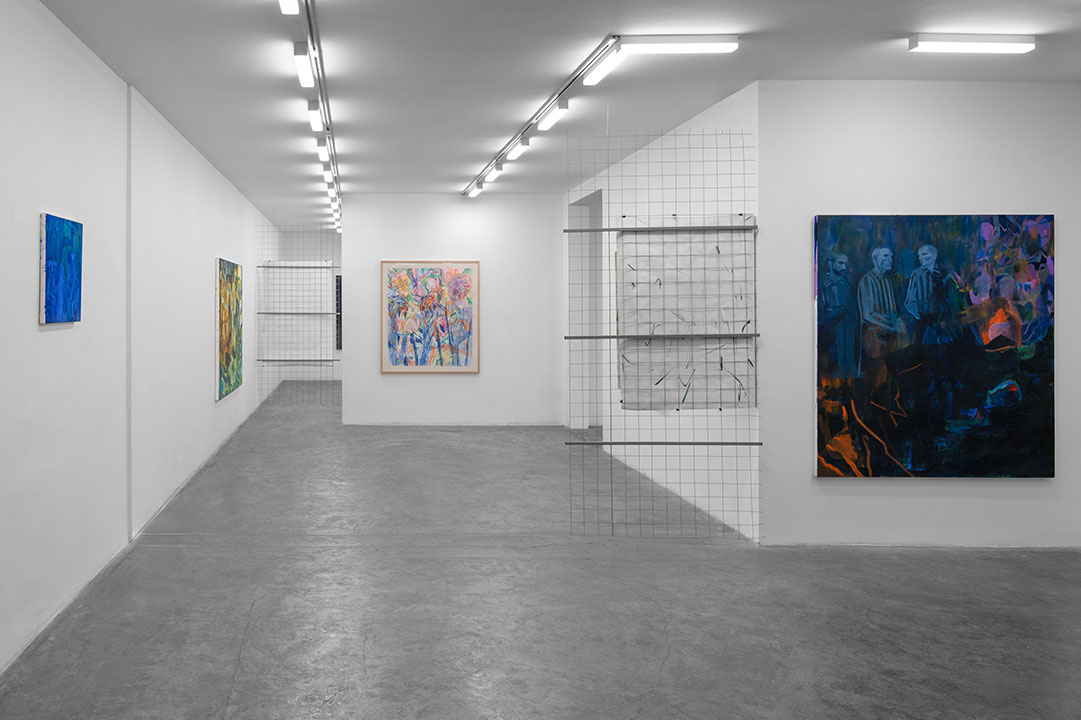
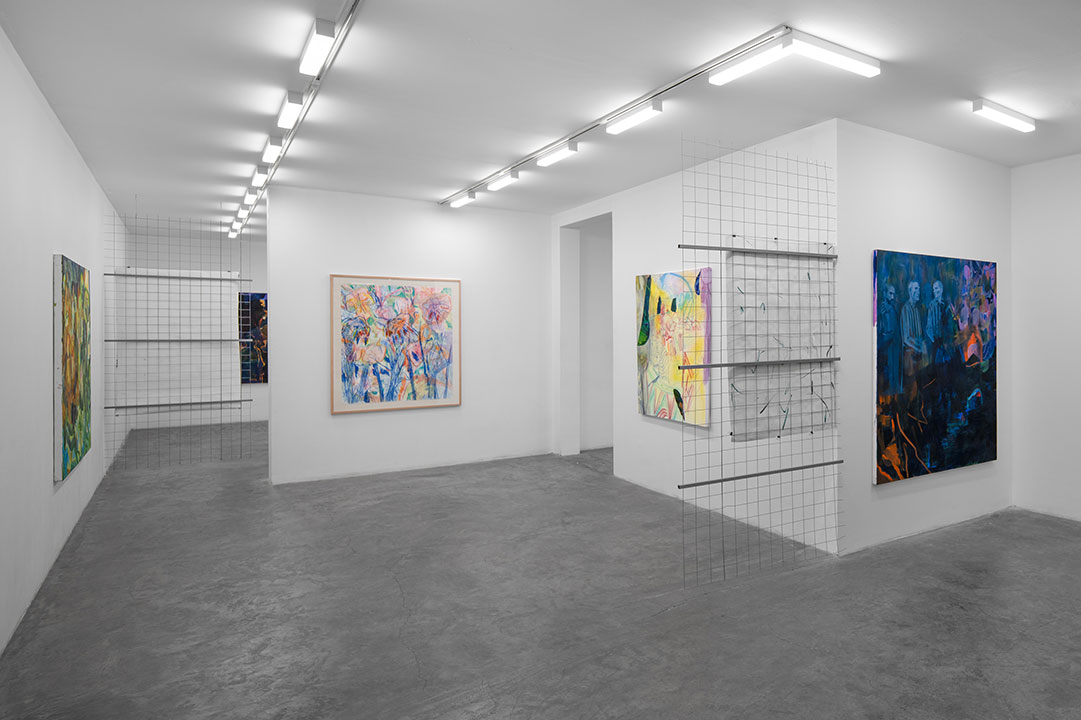
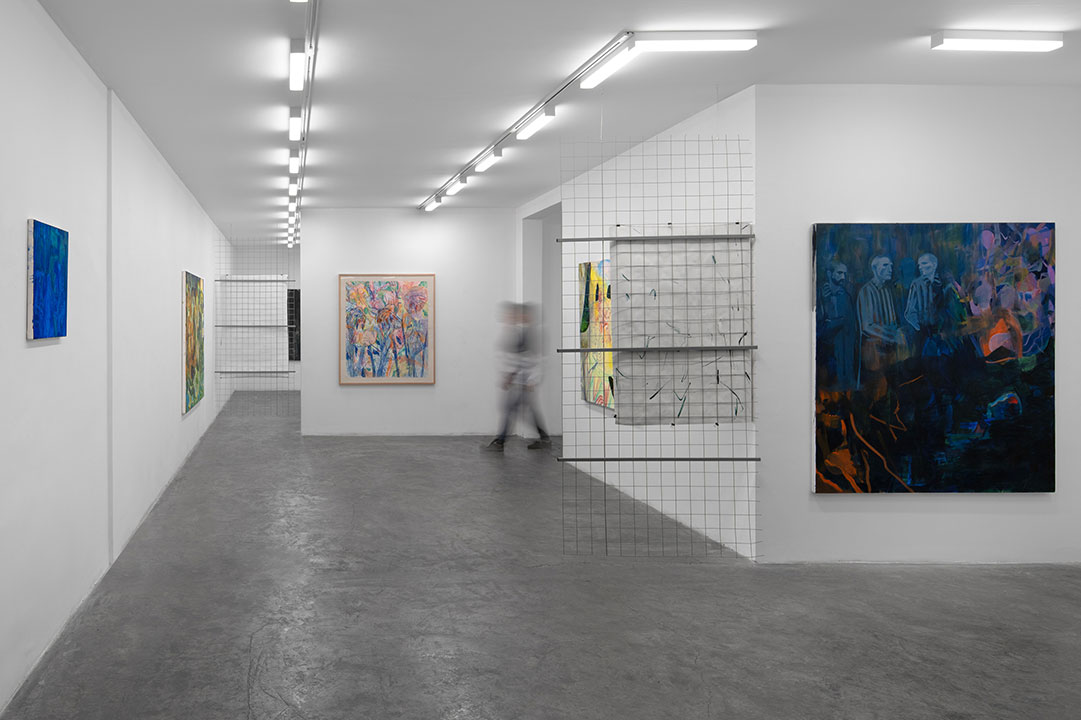
That same intensity carries through the artist’s use of color; highly stimulating and psychological. In his oil paintings, he builds dense layers of pigment—ochres, burnt reds, dark greens and vivid, sometimes unsettling blues. These chromatic fields sustain a hidden intensity, a kind of internal excitement that transforms his landscapes into spaces where emotion is both excluded and compressed. The chaotic, agitated brushstrokes further amplify this tension, making a nuance of motions and unrest that animates the work’s surface.
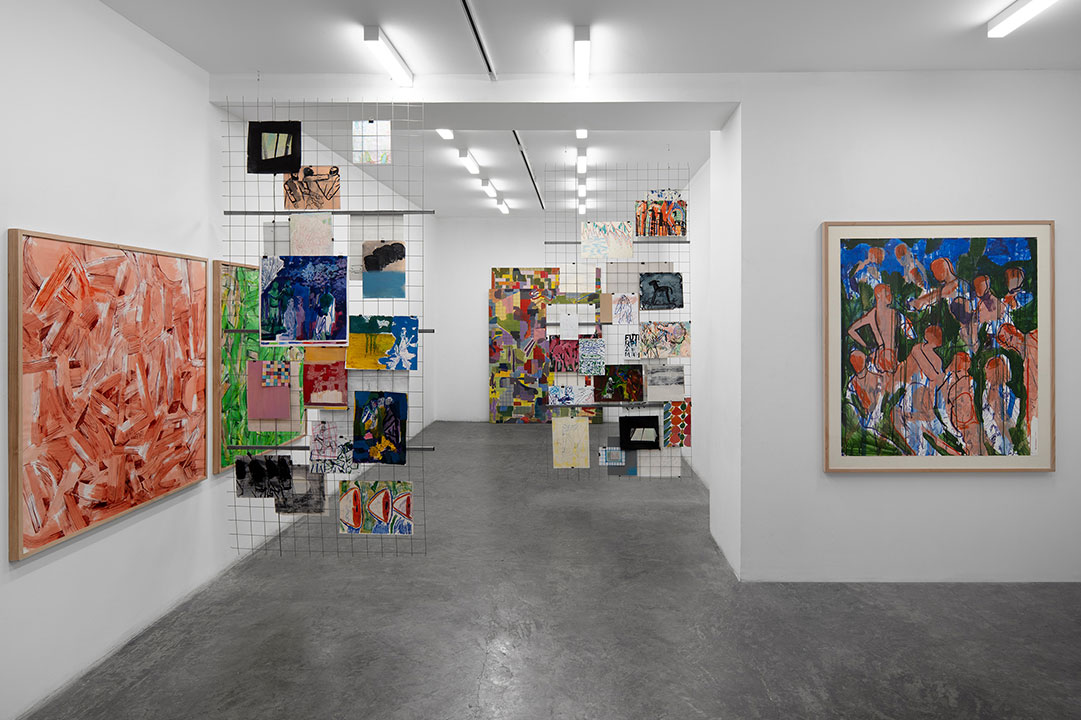
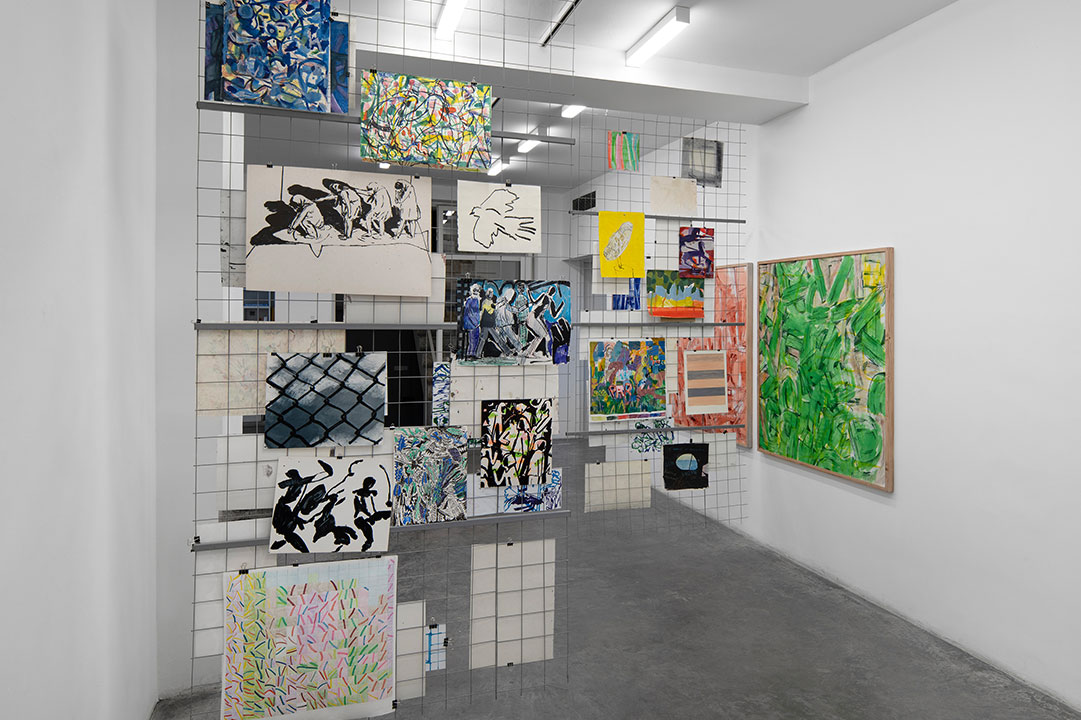
Complementing these canvases, the artist’s recent large works on paper highlight a contrast in materiality. The artist’s dense, oil-based canvasses are balanced by large-scale works on paper—executed in colored pencil and soft pastel—marking a deliberate shift in light, color and spatial dynamics. Brighter, more transparent hues and expansive areas of untouched paper create a sense of openness and release, allowing the composition to breathe, proposing that connection and transcendence are possible within the turbulent journey.
At the same time, the pixelated grid and fragmented forms in Ebrahimi’s recent works are not aesthetic novelties, but repeated expressions of a conceptual thread that he’s played with for years. This artistic decision confronts the general digitalization of experience, where all forms of data are increasingly quantified and processed through a pixelated lens. By moving between deeply human experience and the cold, abstract order of the grid, the artist establishes a tension between what is felt and what is seen.
For Ebrahimi, painting is an embodied practice. The physical encounter between his body and the surface—the pressure of movement, the accumulation and scraping away of pigment—becomes central to how the image takes shape. He is drawn to what he calls the “poor image,” one that carries the marks of process and imperfection, revealing its making rather than concealing it. This tactile draws the work closer to form than to expression, favoring the act of becoming over purpose. His works evoke questioning and unease, investigating the fragile relationship between the individual body and others in uncertain times, while at the same time reflecting the broader impact of modernity on our lives, capturing the shifts of a world in flux.
As Ebrahimi’s work has matured, he has expanded the scale and structural complexity of his compositions. He explores the tension inherent in a world where complex accounts are flattened into quickly digestible, low-resolution "information". This contrast—between the dense, thickly layered oil paintings and the more immediate gestures in his works on paper—allows for a simultaneous exploration of both the raw unconscious emotions and the more conscious observations. Across his practice, Ebrahimi navigates the friction between personal and collective experience. Whether through thickly layered pigment, fragmented line or the disciplined precision of the digital grid, his work continually confronts the pressures of contemporary life, similar to a psychological and political “pressure cooker” rendered in color, form and gesture.
- Orkideh Daroodi
November 2025
Selected Works


Installation Views