Press Release
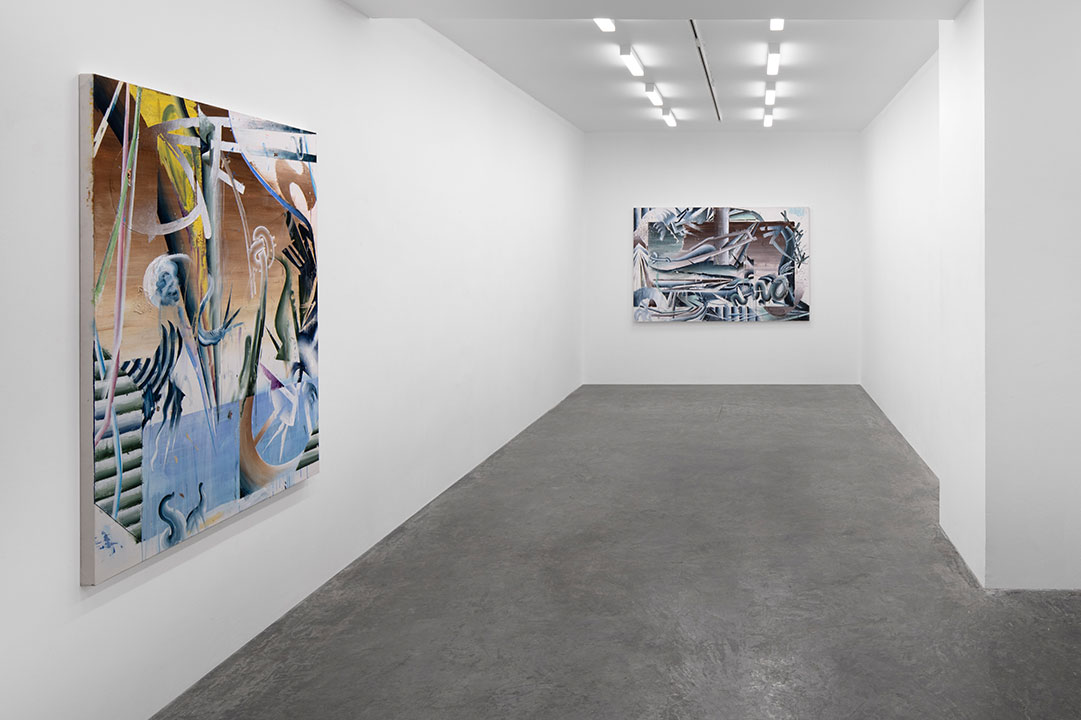
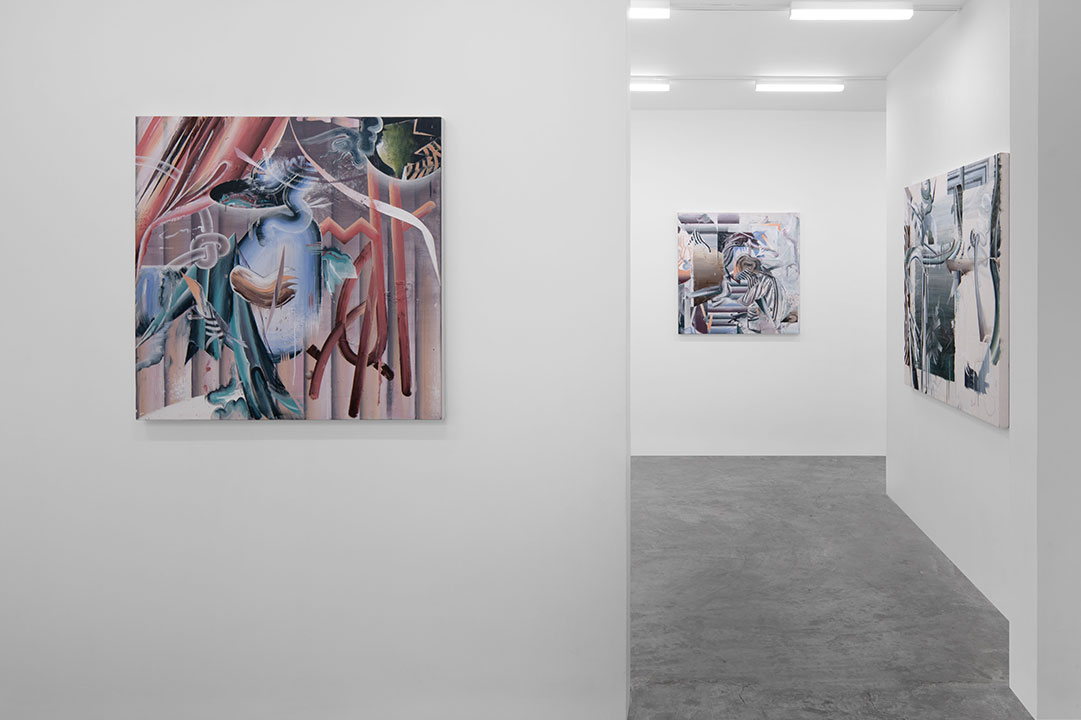
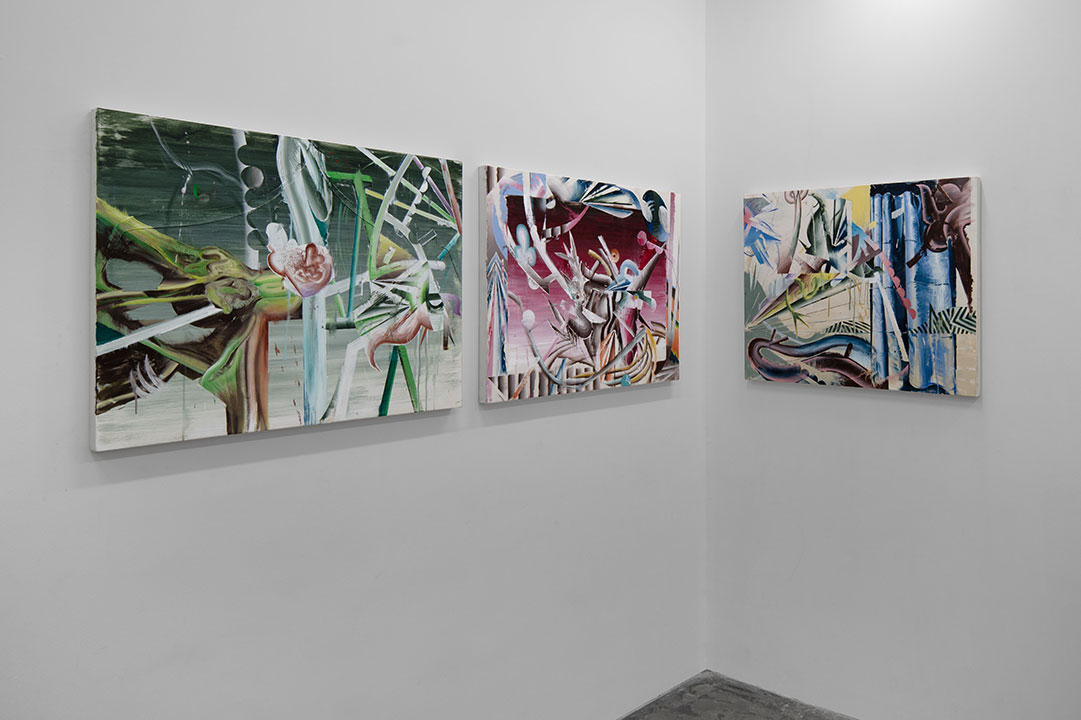
O Gallery is pleased to present “Walled Gardens”*, a series of acrylic paintings on canvas and drawings by Farzad Majidi (b. 1986 Tehran, Iran), marking the artist’s third solo show with the gallery.
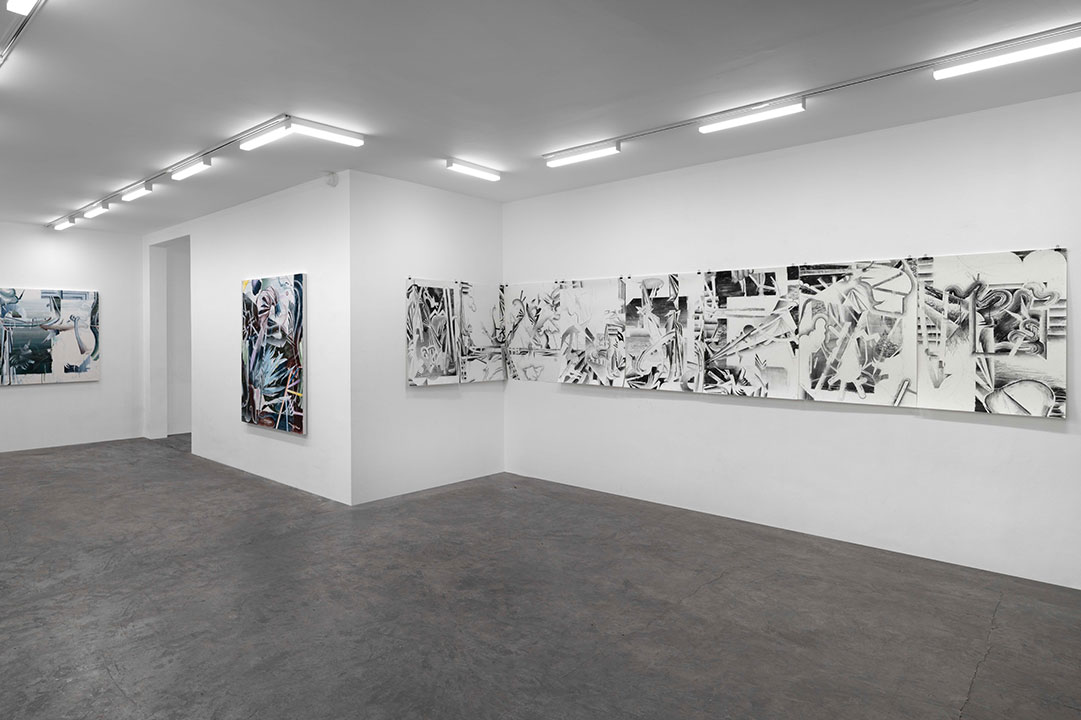
Developed over two years through an experimental and evolving process, the series on view focuses on improvisation and discovery rather than realistic depiction. In the earlier works, the interplay of luminous colors and recurring forms takes precedence, while in the more recent pieces, the dialogue between visual forces, negative space and architectural elements grows more distinct. This gradual shift is most evident in the charcoal drawings on paper—the latest works in the series—where the balance between construction and erasure, as well as the spatial relationships among forms, becomes increasingly visible. Placed together, these black-and-white works allow forms to flow and transform from one piece to another, creating an accidental sense of unity; as the artist notes, it seems that passing through the wall and envisioning a larger garden becomes inevitable.
In this process, Majidi merges abstract and representational forms to create layered visual environments that function as poetic and introspective interpretations of social and cultural conditions. The walled garden—its intrinsic, functional and symbolic qualities—becomes a foundation for pictorial situations that both rely on the possibilities of painting as a medium and carry metaphoric echoes of contemporary life.
Unlike his previous series, the works in this exhibition are without titles, existing in a state of openness and incompletion. The absence of a defined geographic or historical setting—alongside references to European and modernist painting, spatial construction in architecture and representations of gardens in Persian miniature and traditional art and Eastern art—frees these works from singular or totalizing readings, allowing them instead to unfold through temporary, multilayered and evolving interpretations.
“A garden is a living phenomenon, always in the process of becoming; a place where—even when its parts are designed with care and intention—decay, disappearance and spontaneous growth are constantly at work. The wall acts as both a container and a guardian of these ideas, while standing in contrast to many of nature’s own qualities. The tall walls of the Walled Garden hold significance not only for protection and beauty, but particularly for cultivation and growth. The shelter they create, beyond keeping away animals and intruders, can raise the inner temperature by several degrees, forming a microclimate that allows plants to thrive where they otherwise could not. The coexistence of plants with walls, waterways and built structures transforms the walled garden into a space where nature is reimagined through artifice—a place where individuality and community, stillness and motion, growth and threat coexist in a dynamic equilibrium. This tension, this capacity for transformation, also resonates with Michel Foucault’s notion of heterotopia—spaces designed for particular activities that, by operating according to their own logic, generate a distinct sense of time and place, layered with meanings and connections to other realms.”
- Farzad Majidi
* The concept of a garden enclosed by high walls; rooted in the ancient Avestan expression, 'pairi-daeza,' which means 'enclosure' or 'to surround.' This term later evolved into 'Pardis' in Middle and New Persian.
Selected Works


Installation Views